Interview With Predictive Analytics Author Eric Siegel
No More Coupon Clipping: This Startup Wants to Transform How We Shop for Groceries

A Message to Analytics Sorts: Go for It!
Rising Media Prediction Impact

Predictive Analytics Times Newsletter:

April showers bring May flowers or at least that's how the saying goes... Every spring we know those showers will warrant strong return on green lawns, beautiful flowers and wonderful weather. Like April showers, predictive analytics provides strong return as well. This month's articles run the gamut of topics, but all tie back to the best ways to leverage predictive modeling techniques and strategy to achieve meaningful outcomes.

Thanks for taking the time to read this month's articles. If you're not already signed up, I encourage you to do so today to take advantage of all things Predictive. For feedback, thoughts or ideas, don't hesitate to contact us.

Kind regards,

Adam Kahn Adam Kahn
Publisher, Predictive Analytics Times

Not Subscribed? Sign Up For The Predictive Analytics Times Newsletter:

* required

Interview With Predictive Analytics Author Eric Siegel 1
No More Coupon Clipping: This Startup Wants to Transform
How We Shop for Groceries
3
A Message to Analytics Sorts: Go for It! 5
Training Program in Predictive Analytics – April in New York City 6
Predictive Analytics – The Five Things You Need to Know 7
Video: How Companies Predict What You Buy 8
The Computer Knows Who You Are 9
Online Course: Predictive Analytics Applied – On demand any time 10
New 2013 Data Miner Survey 12
Predictive Analytics is a Goldmine for Startups 13
Predictive Analytics World

Originally published in the huffingtonpost.com

We live in an era of Big Data and predictive analytics, and Nate Silver's not the only one who's noticed this. I recently sat down with Dr. Eric Siegel to talk about new book, Predictive Analytics: The Power to Predict Who Will Click, Buy, Lie, or Die. The founder of Predictive Analytics World, Siegel is a former Columbia professor, but has been in the commercial world for a dozen years since. As I write this, I'm about halfway finished with his excellent book and it's rife with a wide variety of examples.

Nate Silver is so famous for predicting the presidential election -- did he use predictive analytics?

No -- but Obama did. Nate Silver made election forecasts for each overall state: which way would a state trend, as a whole? In the meantime, the Obama campaign was using predictive analytics to make per-voter predictions. True power comes in influencing the future rather than speculating on it: Nate Silver publicly competed to win election forecasting, while Obama's analytics team quietly competed to win the election itself.

So what is predictive analytics? How do you define it?

The shortest definition is my book's subtitle, the power to predict who will click, buy, lie, or die. Predictive analytics is the technology that learns from data to make predictions about what each individual will do -- from thriving and donating to stealing and crashing your car. By doing so, organizations boost the success of marketing, auditing, law-enforcing, medically treating, educating, and even running a political campaign for president.

What are the most important things predictive analytics has accomplished?

Prediction is the key to driving improved decisions, guiding millions of per-person actions. For health care, this saves lives. For law enforcement, it fights crime. For business, it decreases risk, lowers cost, improves customer service, and decreases junk mail and spam. It was a contributing factor to the reelection of the U.S. president.

One of the most inspiration accomplishments of predictive analytics is IBM's Watson, which was able to compete against the all-time human champions on the TV quiz show Jeopardy! The questions can be about most any topic, are intended for humans to answer, and can be complex grammatically. It turns out that predictive modeling is the way in which Watson succeeds in narrowing down the answer to each question: It predicts, "Is this candidate answer the correct answer to this question?" It knocks off one correct answer after another -- incredible.

OK, I'll bite. Why does early retirement decrease life expectancy and why do vegetarians miss fewer flights?

These are two more colorful examples of the multitudes of predictive discoveries awaiting within data. University of Zurich discovered that, for a certain working category of males in Austria, each additional year of early retirement decreases life expectancy by 1.8 months. They conjecture that this could be due to unhealthy habits such as smoking and drinking following retirement. One airline discovered that customers who preorder a vegetarian meal are more likely to make their flight, with the interpretation that knowledge of a personalized or specific meal awaiting the customer provides an incentive, or establishes a sense of commitment. Predictive analytics seeks out such predictive connections and then works to see how they may combine together for more precise prediction.

How does predictive analytics work?

By leveraging all the data they collect today, organizations attain a position of power: They learn from the data how to predict human behavior. For example, a company with hundreds of thousands of customer records, some of which show cancellations, can learn from the experience encoded in this data -- a kind of pattern-detection -- to discover which combinations of factors about a customer makes the individual much more likely than average to cancel. These factors aren't always obvious or entirely intuitive; they are signals that reveal odds.

Does predictive analytics exacerbate privacy concerns and issues?

With the advent of predictive analytics, organizations gain power by predicting potent yet -- in some cases -- sensitive insights about individuals. The fact is, predictive technology reveals a future often considered private. These predictions are derived from existing data, almost as if creating new information out of thin air. Examples include Hewlett-Packard inferring an employee's intent to resign, retailer Target deducing a customer's pregnancy, and law enforcement in Oregon and Pennsylvania foretelling a convict's future repeat offense.

By: Phil Simon, Speaker, Author, Tech Pundit
Originally published in the huffingtonpost.com

By: John Cook, writer, Geekwire
Originally published in Geekwire

For years, savvy shoppers have turned to the newspaper to find the best deals at the local grocery store. But new technologies are taking a bite out of the printed coupons, and a Kirkland company by the name of Visible Brands wants to accelerate that trend.

The company is developing a new digital coupon system, one which it says will transform the way people find discounted items in the grocery aisles. To help jumpstart efforts, it recently closed out a funding round at $4.6 million.

"We are delivering the first cloud based media platform that delivers a seamless, targeted in-store digital promotions capability for advertisers," explains CEO Tim Morton, adding that the technology "crushes how brands traditionally influence shoppers at the shelf."

Here's the deal.

Instead of clipping printed coupons or downloading a mobile app, Visible Brands displays discounts on a touch-screen device right in the grocery aisle. To activate a coupon, the shopper simply touches the screen, and the digital coupon is wirelessly connected to a cart or basket. The discount is then applied at checkout, showing up on the receipt.

Visible Brands notes that 70 percent of purchasing decisions are made in the grocery aisle, not while in the car, watching TV or reading a magazine. Connecting with shoppers at the time of purchase is critical, says Morton. The technology also allows retailers to send customized offers to high-value shoppers, using predictive analytics to determine discounts that might be worth displaying. That, in turn, can result in bigger shopping trips and more profits for grocery stores.

With the new funds, Morton said that they are pushing for a commercial launch with several "tier 1" regional and national supermarket chains. The capital was provided by undisclosed angel investors, with Morton only describing them as a "savvy group of investors who understand the scope of our market opportunity." Executives from Microsoft, VISA, AOL and Vulcan Capital are among the backers, while strategic advisors include former First Data senior vice president Doug Byerley and former aQuantive executive Bill Keadle.

Visible Brands also has been working closely with technology partners Microsoft and HP on the offering. In a recent interview with the Windows Azure team, Morton offered a more detailed explanation of how the technology works.

"We use collaborative filtering and location-aware wireless networks to deliver the most relevant coupons to shoppers based on real-time analytics. We can optimize against a store's demand ratios; that is, people who like this might like that, too. We also know, for example, where shoppers are dwelling in the store and whether they are on a quick trip or a stock-up. With these (consumer packaged goods-focused, data-driven insights, we can optimize campaigns to deliver the right offer at the right time to the right shopper. Advertisers get the opportunity to deliver the last impression to shoppers who vote with their feet."

Morton added in an email to GeekWire that the Visible Brands technology allows big consumer goods brands – who spend $300 billion in the U.S. on retail promotions – to start a dialog with consumers online or mobile and "finish the conversation shoppers in the store... right at the shelf."

Here's a video overview of how the system works.

By: John Cook, writer, Geekwire
Originally published in Geekwire

Predictive Analytics World San Francisco

By: Beth Schultz, Editor in Chief, All Analytics
Originally published at All Analytics

Anne Robinson, president of INFORMS, has a message for analytics professionals: "Go for it."

INFORMS, formally known as the Institute for Operations Research and the Management Sciences, will be there to lend a hand, Robinson told me in a phone interview. Along with the business world as a whole, this global, professional society is intensifying its attention on analytics outreach. Among its analytics-related initiatives are the:

  • Bimonthly Analytics Magazine
  • Annual INFORMS Conference on Business Analytics and Operations Research, this year taking place in San Antonio, Texas, April 7-9
  • Certified Analytics Professional (CAP) certification testing program, the first by an independent organization
  • Innovation in Analytics Award, launched in 2011, to recognize enterprise excellence in analytics, among others
  • Annual student competition (See: Calling All Students: Enter an Analytics Competition)
  • Analytics subsection, which Robinson said has more than 900 members today -- "probably the fastest-growing community in our full professional history"

"The reality is that while INFORMS has grown out of a community of operations researchers and management scientists, we've always been a mosaic of professionals -- people focusing on decision analysis, risk analysis, financial analysis, data mining, statistics... they've all always found a home at INFORMS." Admittedly, she added, most of these folks would be at the high end of the spectrum, while the thriving Analytics subsection reflects more diversity.

"We're seeing folks who have less of an 'analytics' job role being at home with INFORMS as we talk about the end–to–end process, and not necessarily the toolbox of operations research and management science," said Robinson, who is also director of supply chain strategy and analytics at Verizon Wireless.

This is not only about capturing the attention of junior analytics professionals, but also the most tenured of business executives.

"For analytics to propagate, it can't just be a bottoms-up effort. It needs to be top down, too," noted Robinson, who pointed to the Executive Forum the organization hosts for senior executives in conjunction with the annual business analytics and operations research conference.

Analyst, executive -- no matter, to everybody, Robinson has this message to carry forward throughout 2013:

Be brave enough to take the next step, whatever your maturity level. If your company has just scratched the surface, has just learned about analytics, and is looking to move up the chain,

do it -- there'll be a big reward,that'll seem counterintuitive, because if it was intuitive you'd be doing it already, but you have to take the leap to the next level.

By taking it to the next level, Robinson means moving from the historical look-back that comes with descriptive analytics to the looking head of predictive analytics and beyond. "Take the leap to prescriptive analytics and optimization models and how they can really help you figure out what are those best decisions you can make for your organization."

By: Beth Schultz, Editor in Chief, All Analytics
Originally published at All Analytics

Predictive Analytics Training in NYC

by Yan Krupnik, Marketing Manager, Retalon

Originally published in Supply & Demand Chain Executive

1). The Future of Predictive Analytics
Is Here Now

Over the past 10 years, advanced analytics grew exponentially to become one of the hottest topics in business technology. A look at Google Trends reveals an over 300 percent spike in searches for predictive analytics since 2010. Moreover, according to global business technology research group IDC Manufacturing, the advanced business analytics market grew to a $31.7 billion market. Predictive analytics is big and it deserves your attention.

2). Go Full Circle with All That Data You've Collected
Businesses collect more data than ever before and from every aspect of the supply and demand chain–logistics; vendor compliancy/lead times; POS data; inventory levels; prices; markdowns; consumer behavior; demand forecasts; and more. But what good is all this data if you can't derive real value from it? Being able to monitor and track real–time data sounds great but, in reality, that is the same as watching money pour out of your supply chain.

The entire point of collecting all this data is to have the ability to make smarter decisions going forward; get real value out of it; and to prevent unnecessary costs proactively.

3). Traditional Business Intelligence vs. Predictive Analytics
Traditional business intelligence tools are backward looking. Queries, search tools, insight reports and real–time dashboards will give you more visibility into your supply chain. Sure, it beats guess work and provides you with an explanation of where you're losing and winning–but is that enough? If your report suggests that your promotion did not go well because a particular vendor shipped the inventory too late, there isn't much that you can do with the sunk costs of this mistake. Using traditional analytics methods is like driving a car by solely looking into the back mirror. Predictive analytics helps you see what kind of challenges and opportunities you will face; and provides you with a chance to act on it proactively.

4). Business Specific Predictive Analytics
The phrase "predictive analytics" gets tossed around too freely. There's predictive analytics for social media; marketing; banking; health; entertainment; and more. But in order for a predictive analytics engine to work for you, it must be business specific. The reality is that unless the software you decide to utilize is taking all the factors of your specific business into account, it will not be of any value to you. A generic analytics tool—no matter how savvy it may seem–is not what you are looking for.

Find the software vendor that understands your business, and has a tailored solution for your specific needs. When you find this software, then ask for an analytic assessment. If their engine is as smart and perfect for your supply chain as they say, make them prove it to you by showing you what kind of benefits your specific business will experience in the future. After all, they are experts in predicting numbers.

5). The Benefits of Predictive Analytics
Being able to know who will buy which SKUs at which locations at which price gives businesses tremendous power.

Businesses that use predictive analytics experienced inventory cost reductions of up to 40 percent. Predictive analytics provide businesses with greater visibility across their supply and demand chains that allow them to calculate the optimal prices; safety stock; assortment; and vendor lead times. No longer do you have to deal with over–stocks and out–of–stocks which improves your customer service level, not to mention the competitive advantage you will have over late adapters who will be losing lots of market share in the years to come.

by Yan Krupnik, Marketing Manager, Retalon
Originally published in Supply & Demand Chain Executive

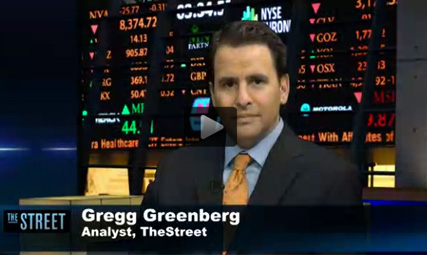
Here's How Companies Predict What You Buy:
Companies are unleashing the power of data to predict what you buy, Eric Siegel, author of Predictive Analytics, tells Gregg Greenberg.

Originally published at marketwatch.com

There's a surprising twist. While some question whether the prescient machines that drive decisions by way of induction and prediction are trustworthy, an emerging problem is that they often predict too well. Predictive technology is so powerful, it reveals a future often considered private.

Millions of operational decisions in finance, marketing, law enforcement, and health care are now machine–driven — often with improved dexterity — using electronic predictions of human behavior, one person at a time. The technology to do this, predictive analytics, is a booming practice that's taken hold across many industries.

Computerized prediction will never be perfect – like people, prognostic technology often gets it wrong, although in many applications it turns out to be more accurate than people are. But predictive analytics can cause difficulties not only when its predictions are wrong, but when its predictions are right.

Future tension

For example, Hewlett-Packard Co. flags those of its 330,000 employees who are most likely to quit their job – then, a small but growing number of managers review these predictions. When the computer's prediction is correct (a true positive), might there be qualms about divulging an employee's private intentions to the one person from whom he or she may most adamantly wish to keep it private – his or her boss?

As we learned last year, Target Corp. predicts which female customers are pregnant in order to identify sales opportunities with soon–to–be parents. When the technology is correct for a customer, her expectant status is now unwittingly in the hands of strangers, marketers who are not trained in the privacy protocols of the health–care industry. Should the marketing department of companies like Target be entrusted with such information?

In other cases, we pay dearly when predictions miss their mark . As self-driving cars emerge from Google and BMW and begin to hit the streets, the world will see automobile collision casualty rates decrease overall. "The driverless car is an unbelievable invention... the biggest gain [beyond convenience] might even be in the reduction of fatalities," forespoke University of Chicago economics professor Steven Levitt on Freakonomics Radio.

But when a self-driving car fails to anticipate an impending collision (a false negative) and lives are lost, will the public's ire and protest shut down widescale adoption?

Crime-predicting computers now help determine who stays in prison. In a growing number of states, judges issuing sentences and parole boards deciding on releases inform each decision with a calculated probability of a repeat offense. Considering that a false positive prediction causes injustice for a potentially law-abiding parolee by keeping him or her in prison, is the computerized support of incarceration decisions acceptable?

Truths and consequences

Embracing predictive analytics challenges the world with these and other unprecedented dilemmas.


Course outline, sneak preview, discount offers and registration

How can we safely harness a predictive machine that divulges unvolunteered truths about individuals without putting civil liberties at risk?

There is no easy solution. Privacy advocates – of which I am one – go too far when they sound alarms that imply predictive analytics ought to be sweepingly indicted. As with many technologies, it can enact both good and evil – like a knife. Outlawing it completely is not viable, and would be akin to forbidding deduction.

Important, powerful, and promising – predictive analytics is here to stay. Less paper is expended and consumers receive less "junk mail" when direct mail is predictively targeted. Patients receive improved health care. Police patrol more effectively by predicting crime, and fraud is similarly reduced. Nonprofits boost fundraising and more adeptly select the beneficiaries of their services. Movie and music recommendations improve.

But now is the time to define how we may predictively serve the masses without mistreating individuals. As we strike the balance between caution and cashing in, a new cultural acceptance of machine risk is bound to emerge. When it comes to road safety, for example, Levitt conjectures on where the trade–off may land: "My guess is that if driverless cars have even a tenth as many fatalities as cars with drivers, there will be no public acceptance of them. Maybe even a twentieth."

Both the organization eager to predict and the individual wary of being predictively pried open must work harder to understand one another's perspectives and concerns. The agreement we collectively come to for predictive analytics' position in the world is central to the massive cultural shifts we face as we fully enter the information age.

Originally published at marketwatch.com

Eric Siegel, Ph.D., is the founder of Predictive Analytics World (www.pawcon.com) and author of "Predictive Analytics: The Power to Predict Who Will Click, Buy, Lie, or Die" (Wiley, 2013).


An extensive survey of data mining and predictive
analytics professionals
, the Rexer Analytics 2013
Data Miner Survey
reports data miner needs,
preferences, and views:

  • The most popular software tools
  • The main challenges faced
  • The top predictive modeling methods
  • The biggest verticals mining their data
  • Etc. -- results across 50 surveyed items

We will unveil the survey results at the September 2013 Boston Predictive Analytics World conference. We will also email the Summary Report to everyone at that time. If you left your e-mail on the previous page we will send you the summary report.

Complete the Data Miner Survey Now!

by Martin Zwilling, Contributor
Originally published at forbes.com

Traditional business intelligence (and data mining) software does a very good job of showing you where you've been. By contrast, predictive analytics uses data patterns to make forward–looking predictions that guide you to where you should go next. This is a whole new world for startups seeking enterprise application opportunities, as well social media trend challenges.

According to Eric Siegel in his new book "Predictive Analytics," it's the power to predict who will click, buy, lie, or die. He calls his book a primer, but his real–life examples illustrate well how predictive analytics unleashes the power of data, and how "big data" embodies an extraordinary wealth of experience from which to learn.

Eric provides many examples of potential and real application areas that are ripe for predictive analytics, but my view is that smart entrepreneurs can extrapolate these to hundreds more, just waiting to be tapped. Here are ten examples to get your creative juices flowing:

1. Targeted direct marketing. The challenge is to increase response rates and propagate a single view of the customer, by integrating customer data from multiple Web and social media interactions. Then companies can determine promotional effectiveness by narrowly defined customer segments, by location, or by delivery channel.

2. Predictive advertisement targeting. Online, everyone wants to know which ad each customer is most likely to click. Then they can display the best ad, based on the likelihood of a click, as well as the bounty paid by its sponsor. Everyone wins, since consumers hate being presented with ads that are irrelevant to them.

3. Fraud detection. We all want to know which transactions or applications for credit, benefits, reimbursements, refunds, and so on, are fraudulent. On the other side of the table, businesses need to minimize false insurance claims, inaccurate credit applications, and false identities.

4. Investment risk management. Whether you are contemplating an investment in your favorite startup, or a little-known stock on a public exchange, there is "big data" out there that can't possibly be evaluated by you without predictive analytics. Companies need the same service on partner and acquisition candidates, even vendors.

5. Customer retention with churn modeling. Every business wants to predict which customers are about to leave, and for what reasons, so they can target their retention efforts. New one-time customers may be incented to return. Without predictive targeting, a retention campaign may cost more than it gains.

6. Movie recommendations. Movies are selected, or recommended to customers, based on past reviews, related interests, or analysis of Twitter comments. On the movie production side, it's time to start doing analyses on movie scripts, based on reaction to similar movies, to predict box office revenue and cities to hit.

7. Education – guided studying for targeted learning. Every quiz show aficionado would like some guidance on which question areas need more study, and every student needs help on how to spend his limited study hours more effectively. Schools need the same analysis to provide more effective teaching media and techniques.

Political campaigning with voter persuasion modeling. I'm sure every campaign would love to know which voters will be positively persuaded by specific contacts, such as a phone call, door knock, flier, or TV ad. The rest of us would rather not be annoyed by the multiple contacts of the wrong type.

Clinical decision support systems. With costs escalating in healthcare today, it's more important than ever to determine which patients are at risk of developing certain conditions, like diabetes, asthma, heart disease, and other lifetime illnesses. Additionally, predictive analytics can help make the best medical decision at the point of care.

Insurance and mortgage underwriting. Predictive analytics will allow auto insurance companies to accurately determine a reasonable premium to cover each automobile and driver, which helps their bottom line, as well as ours. A financial entity needs the same ability to more accurately assess a borrower's ability to pay before granting a mortgage.

by Martin Zwilling, Contributor
Finish reading the article at forbes.com
Predictive Analytics World


PAW


 Rising Media   Prediction Impact